

USDA Loans in the Charleston Region
A USDA loan lets you buy a primary home with zero down and no large down payment, and around Charleston the eligible map reaches farther than most buyers think: much of rural Berkeley and Dorchester County qualifies even while the urban core does not. The whole game is two tests, the property address and your household income, and a veteran-owned broker who runs USDA files here can tell you in minutes whether your target home and your numbers both clear.
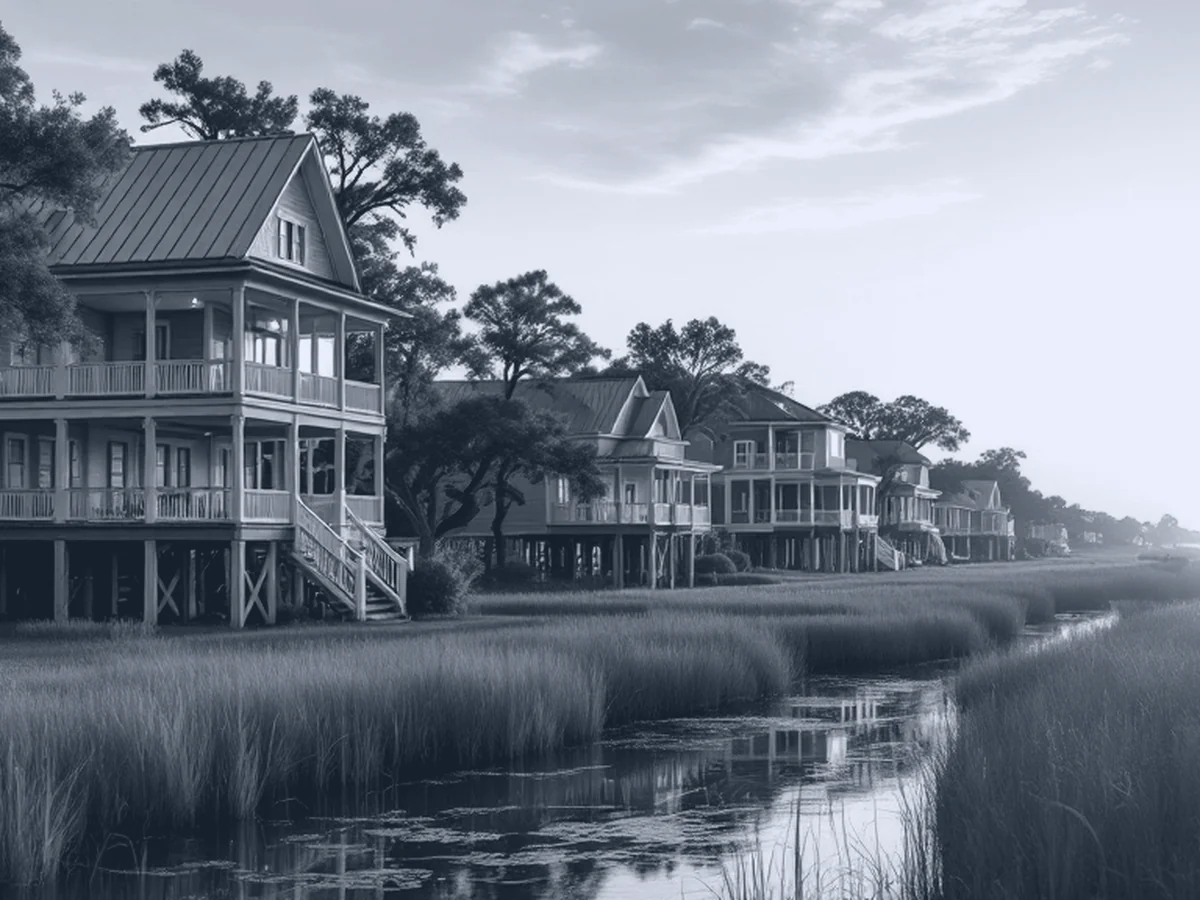
Zero down, backed by the federal government, for the right address
A USDA loan is a mortgage guaranteed by the U.S. Department of Agriculture through its Rural Development program, and its headline benefit is the one buyers care about most: no down payment. There is no required minimum down and no large lump sum to bring to closing, which is what makes it the strongest zero-down option for civilian buyers who do not have a VA benefit. The government does not lend you the money directly on the common Guaranteed program; it backs the loan a private lender makes, which is what lets that lender offer 100% financing without the monthly private mortgage insurance a low-down conventional loan would carry.
The trade for that power is that USDA is a targeted program, not an everyone program. It is built to put owner-occupants into modest primary homes in areas the USDA defines as rural, and to keep the benefit aimed at low-to-moderate-income households. So unlike FHA or conventional financing, a USDA loan turns on two pass-or-fail gates that have nothing to do with how strong a borrower you are: where the house sits and how much your household earns. Clear both and the rest of the file looks like a normal mortgage.
That geography test is exactly why this program is underused around Charleston. Buyers assume "rural" rules out the metro, but USDA eligibility is drawn by map, not by feel, and the eligible boundary wraps around the developed core and covers a surprising amount of the outer counties where families are actually buying land and new construction. As a veteran-owned broker, Home Loans Inc shops your USDA file across a wholesale lender network on one application, because lenders add their own credit overlays on top of the USDA rules and the same borrower can clear one lender and not another.
The property must be in a USDA-eligible area, and around Charleston that is the outer ring
This is the first gate and the one that catches most Charleston buyers off guard. USDA does not care how rural a place feels; it cares only whether the exact street address falls inside the USDA Rural Development eligibility map. Here is how that map actually lays over the tri-county area after 8+ years originating loans across this market.
The urban core does NOT qualify
Downtown Charleston, the peninsula, North Charleston, Mount Pleasant, and the close-in developed parts of West Ashley sit inside the ineligible city footprint. If your address is in the dense metro, USDA is off the table and FHA or conventional is the move instead.
Rural Berkeley County, mostly yes
Large stretches of Berkeley County are eligible, including the Moncks Corner outskirts, St. Stephen, Pineville, Cross, and Jamestown. The booming Cane Bay and Nexton corridors are a mix as the map is redrawn around new growth, so the address has to be checked parcel by parcel.
Rural Dorchester County, mostly yes
Ridgeville, Harleyville, St. George, Reevesville, and Givhans are typically eligible, along with the rural land outside the Summerville core. As Summerville and the I-26 corridor sprawl outward, the eligible line keeps moving, which is the whole reason to verify rather than assume.
Outer Charleston County pockets
Parts of rural Charleston County away from the developed islands and the peninsula can qualify, including areas toward Hollywood, Ravenel, McClellanville, and the rural reaches up Highway 17. Waterfront and resort islands generally do not.
New construction is a sweet spot
Much of the new-build and large-lot inventory around the metro edge sits on eligible land. USDA pairs especially well with the kind of zero-down buyer purchasing a first home in a newer outer-county subdivision rather than a fixer in town.
Always verify the exact address
Eligibility is set by the specific parcel, and the map is updated periodically, so two homes on the same road can land on opposite sides of the line. Send us the address and we run it against the current USDA map before you ever write an offer, so a deal never collapses over geography. See where USDA fits among the first-time buyer options.

We run USDA eligibility on your exact address, free, before you offer.
Your household income has to fall under the area limit
The second gate is income, and it works opposite to how most loan rules feel. Where a conventional loan rewards higher income, USDA caps it: the program exists for low-to-moderate-income households, so your total household income has to come in under a limit set by county and by household size. The limit counts the income of every adult who will live in the home, not just the borrowers on the note, which surprises buyers who plan to house a working parent or an adult child.
The cap scales with how many people are in the household, with a higher limit for families of five or more, and it varies by county across the Charleston region. USDA also allows certain deductions, for dependents, childcare, and some medical costs, that can pull an otherwise-over household back under the line, which is exactly the kind of thing worth a five-minute call before you assume you earn too much. Limits are reviewed and adjusted periodically by USDA, so we always check your number against the current figure for your specific county and household size rather than a stale chart.
The practical read for Charleston: a lot of single-income and dual-modest-income families buying in Berkeley and Dorchester County land comfortably under the cap, while two strong professional incomes often will not. We compare your real household income to the live limit up front, so income never becomes a surprise denial in underwriting.
The USDA guarantee fee: upfront plus annual, lower than FHA MIP
USDA is not free money; it is backed money, and the way the government funds that backstop is the guarantee fee. It comes in two parts, and understanding both is how you compare USDA honestly against FHA and conventional.
The upfront guarantee fee
A one-time fee charged at closing, calculated as a percentage of the loan amount. Like the VA funding fee, it can be rolled into the loan rather than paid in cash, which keeps the zero-down promise truly zero out of pocket on this line.
The annual fee
A smaller ongoing fee, figured on the balance and collected monthly inside your payment. It behaves like mortgage insurance, but it is meaningfully lower than FHA's monthly MIP on a comparable loan, which is a core reason USDA can win on monthly cost.
It runs the life of the loan
This is the catch to plan for: the annual fee stays for the full loan term and does not drop off at 20% equity the way conventional PMI can. If you expect to build equity fast, that is a real factor in the USDA vs conventional decision, and one we model with you.
Lower drag than FHA overall
FHA also carries life-of-loan mortgage insurance on most loans, and at a higher monthly rate. So between the two life-of-loan programs, USDA's combined fee load is typically the lighter one for an eligible rural buyer.
Credit, DTI, and property condition: what underwriting expects
Once your address and income clear the two gates, a USDA file underwrites a lot like any other government loan, with a few program-specific expectations worth knowing before you apply.
Credit expectations
USDA does not publish a single hard minimum score, but most lenders look for a mid-600s score for a streamlined approval, with manual underwriting possible below that on a strong file. We match your credit profile to the lender most likely to say yes, instead of you guessing at one bank's overlay.
Debt-to-income (DTI)
USDA leans on standard ratio guidelines, commonly around a 29% housing and 41% total DTI target, with room to exceed them when compensating factors like reserves or strong credit are present. We structure the file to those ratios before submission.
Owner-occupied, primary only
USDA is for the home you will live in. No investment properties, no second homes, and generally no income-producing acreage or working farms, despite the "Agriculture" in the name. The home has to be modest and residential in use.
Property condition matters
The home must be safe, sound, and sanitary. The USDA appraisal checks that major systems, the roof, heating, plumbing, and electrical, are functional and that there are no health or safety defects, similar in spirit to FHA's standards.
Well and septic in rural homes
Out in eligible Berkeley and Dorchester County, many homes run on a private well and septic rather than public water and sewer. USDA requires those to be tested and to meet local health standards, a step we line up early so it does not stall the closing.
No income-producing land
The lot has to be residential in character and typical for the area. A large parcel can be fine, but value tied to commercial farming or outbuildings used for income generally will not count toward the loan.
USDA vs FHA vs VA: when USDA actually wins
USDA is one of three low-or-no-down government programs, and the right one depends on who you are and where you are buying. Here is the honest comparison we walk Charleston buyers through.
USDA wins when
You are buying in an eligible outer-county area, your household income is under the cap, and you want true zero down without a VA benefit. For an income-eligible family buying rural Berkeley or Dorchester land, USDA usually beats both FHA and conventional on cash to close and monthly cost.
Rural + income-eligible + no downVA wins when
You are an eligible veteran or service member. VA is the strongest zero-down loan there is: no down payment, no monthly mortgage insurance, and no income cap or rural-area restriction. If you qualify for VA, it almost always beats USDA.
VA loans →FHA wins when
You are buying inside the urban core where USDA is not eligible, your income is above the USDA cap, or your credit needs FHA's flexibility. FHA needs a 3.5% down payment but has no area or income limits, so it is the fallback when USDA's two gates rule you out.
FHA loans →Conventional wins when
You can put real money down and have strong credit. Putting 20% down avoids mortgage insurance entirely, and even at less, conventional PMI drops off at 20% equity, unlike USDA's life-of-loan fee. It is the long-run play when you have a down payment.
Build equity, drop the MITalk to a Charleston USDA loan specialist
Home Loans Inc: Jason Sharon, Mortgage Broker
2557 Ashley Phosphate Rd, North Charleston, SC 29418
How a Charleston USDA purchase actually works
1. Check both gates first
Before anything else we run your exact target address against the current USDA map and compare your household income to the live county limit. Two minutes here saves a dead deal later.
Address + income2. Real-numbers pre-approval
We shop your file across wholesale lenders and build a pre-approval that folds in the upfront and annual guarantee fees, so the zero-down math you see is the math that closes.
No surprises later3. Property and condition
We line up the USDA appraisal and, on rural homes, the well and septic testing early, so condition requirements do not stall you near the finish line.
Safe, sound, sanitary4. Underwriting to closing
We manage the USDA guarantee approval through Rural Development and the lender and drive the file to the closing table.
We run the fileWhy Charleston buyers choose Home Loans Inc for USDA
Jason Sharon founded Home Loans Inc in 2018 after serving as a nuclear engineer in the U.S. Navy, a background that shows up as precision on every loan file. He holds NMLS #1281448 (company NMLS #1728740) and has spent 8+ years originating loans specifically across the Charleston metro, which is why this page reads like a lender's map of where USDA actually works here rather than a brochure that repeats the program brochure.
Because we are a veteran-owned broker and not a single bank, your USDA file is shopped across a wholesale lender network on one application, which matters because USDA lenders layer their own credit overlays on the program's rules. Charleston-area buyers have left 430+ reviews at a 5.0 rating, and we are BBB A+ accredited. You will work with a veteran-owned broker, not a call center.
USDA loans around Charleston, frequently asked
Rated 5.0 by the families we serve.
Jason knows his stuff! We highly recommend him for your mortgage needs! He responds timely, provides information you didn't know you needed, puts the client needs first, and makes common sense adjustments throughout the entire process.
Jason and his team did an amazing job for me. They communicated often and made the entire mortgage process smooth and efficient. I can genuinely say that they are honest, trustworthy and strive to provide the best service possible to their clients.
Jason has been awesome since the beginning. He has been communicative, professional, KNOWLEDGEABLE, and honest. I am very happy with all my services so far, and I recommend UWM!